
Rescue and Rehabilitation of a Red-Eared Monkey in Takamanda National Park
Ebai Terence
April 8, 2026
A recent wildlife rescue operation in Takamanda National Park highlights the continued commitment of conservation actors to protecting endangered species within and around the park with technical and financial support by the Programmme of Sustainable Management of Natural resources (PSMNR). This goes in line as efforts to curb the enormous threat to biodiversity of the park with surge in the exploitation of timber species notably Ebony by Nigerians hence deteriorating and leading to habitat loss of wildlife species.
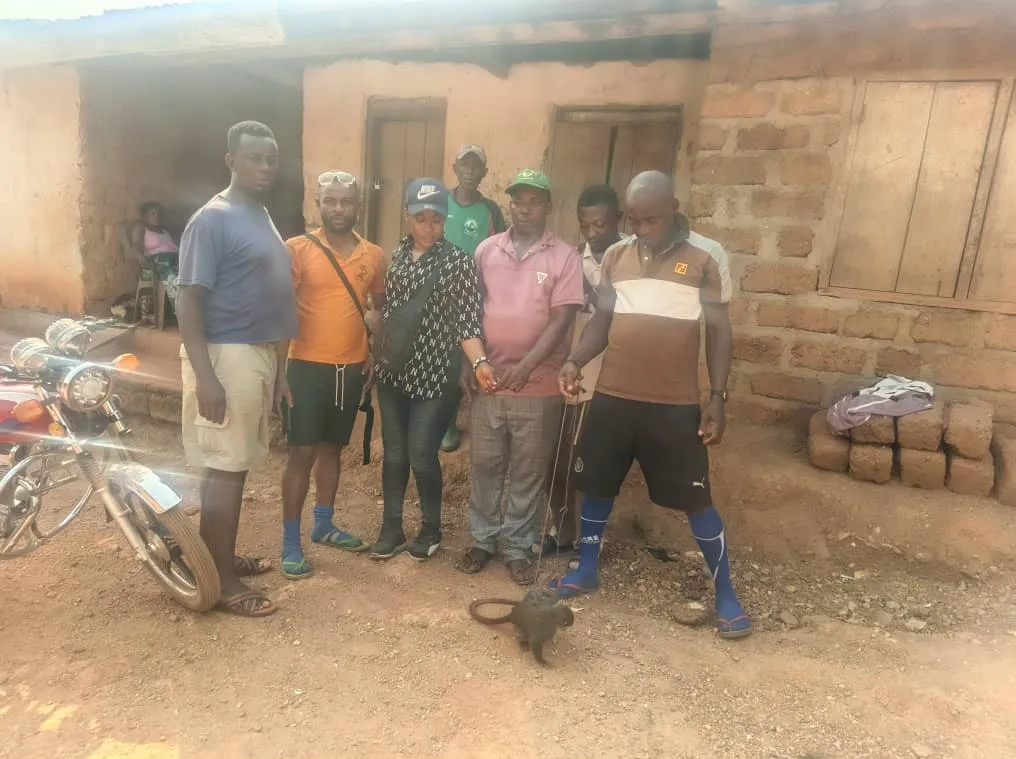
The intervention which had as objective to track down all illegal activities within the park, map out hot spots for illegal exploitation of ebony, identify culprit and arrest them with possible follow up of prosecution followed the recovery of a red-eared monkey from a resident of Kajifu village, who claimed to have rescued the animal from the forest after it was separated from its mother. The individual reportedly kept the monkey for a few days, attempting basic rehabilitation, before voluntarily handing it over to park authorities.
In response, a park intervention team was deployed, comprising four eco-guards, the Collaborative Management technician (CMT), and two personnel from the Regional Protection Unit. The operation was led by the Head of the Protection Unit and involved a total of seven team members, accumulating 42 man-days in the course of the mission. Worthy of Note is the fact that this intervention was a community-led initiative with preliminary information gotten from specific anonymous community members. Eight in total were involved and accumulated a total of 24 man-days.
Following the recovery, the monkey was transported from Kajifu to Mamfe by one eco-guard and a member of the Regional Protection Unit based in Buea. The next phase of the journey, from Buea to the Limbe Wildlife Centre, was supervised by the Head of Finance and Administration of Takamanda National Park, ensuring proper documentation and coordination.
Upon arrival at the Limbe Wildlife Centre, the animal was received and assessed by the veterinary unit. Preliminary examinations revealed the presence of small cartridges embedded beneath the skin around the abdominal region, indicating that the monkey had likely been targeted by a hunter using a firearm. This injury is believed to have caused its separation from its mother. The monkey was registered, and official handover documents were completed between the Centre and the park service.
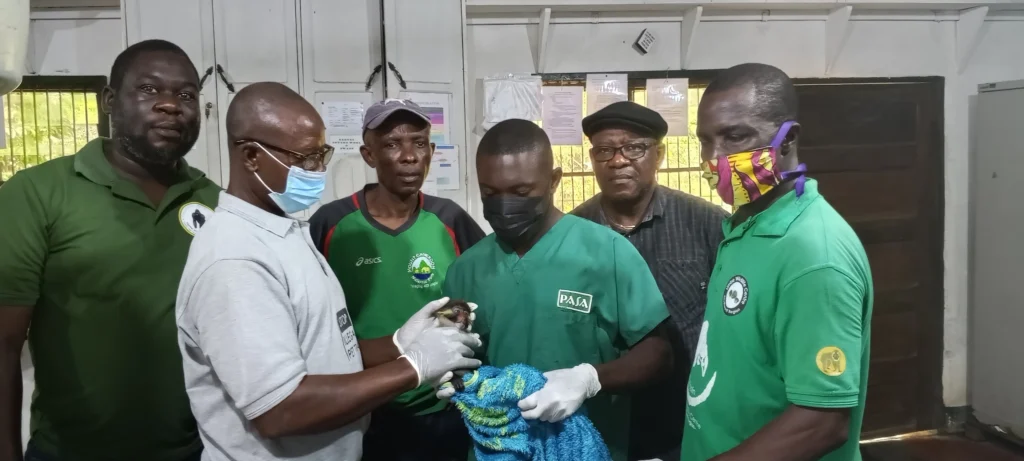
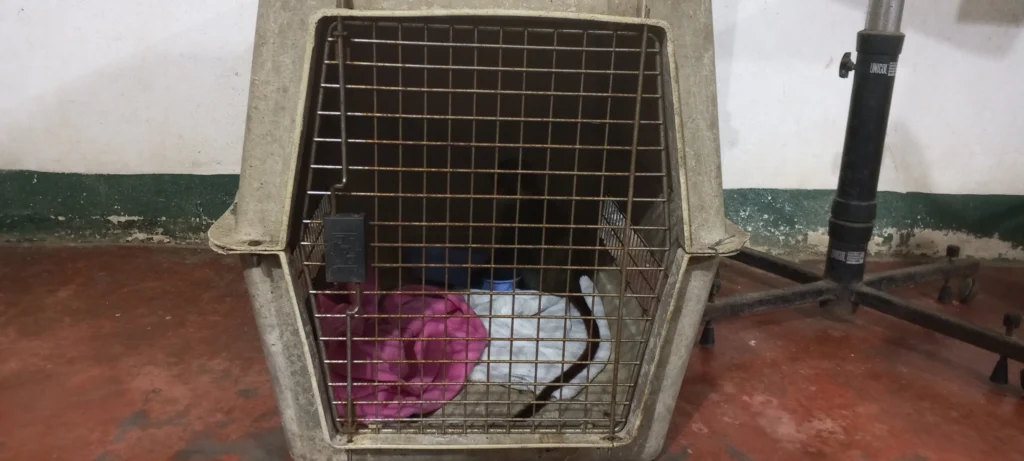
This successful rescue and transfer operation marks a significant achievement for conservation efforts in Takamanda National Park. By saving and rehabilitating the red-eared monkey, the team has contributed meaningfully to the preservation of a vulnerable species and reinforced the importance of collaboration between communities and conservation authorities. This operation serves as a primary testament to practical collaboration between the park service and community members who act as stewards as far as the management, conservation and maintaining the overall integrity of the park is concern. With continuous mobile and fixed patrols, impromptu patrols, joint community-based surveillance within the park and programmed capacity building of community members on intelligence gathering in the days ahead, one can say unequivocally that the future of takamanda National Park is bright
Author of Article: Ebai Terense Muele
Head of Finance and Administrative Unit