
Welcome to WordPress. This is your first post. Edit or delete it, then start writing!
ILLEGAL EBONY LOGGING THREATENS CAMEROON’S TAKAMANDA NATIONAL PARK
Agbov
April 8, 2026
INTRODUCTION
Takamanda National Park (TNP) Landscape forms the Cameroon portion of the larger Cross River Landscape, a rugged and remote highland area stretching into Cross River State in Nigeria. This landscape is home to the surviving population of the Critically Endangered Cross River gorilla (Gorilla gorilla diehli), with less than 350 individuals remaining. It is a mountainous and biologically diverse region, holding a population of chimpanzees, several monkey species, Elephants, small antelopes, pigs, many bird and tree species. Fueled by the ongoing armed conflict in the south west region, Takamanda National Park (TNP) is currently facing a silent crisis: the rapid, illegal exploitation of African ebony (Diospyros crassiflora).
THE EBONY CRISIS
Ebony, renowned for its dense, black hard wood, is one of the most targeted precious woods in West and Central Africa. In Cameroon and Takamanda National Park in particular, the overexploitation of this slow-growing tree has become a major conservation concern, driven by high demand in international market.
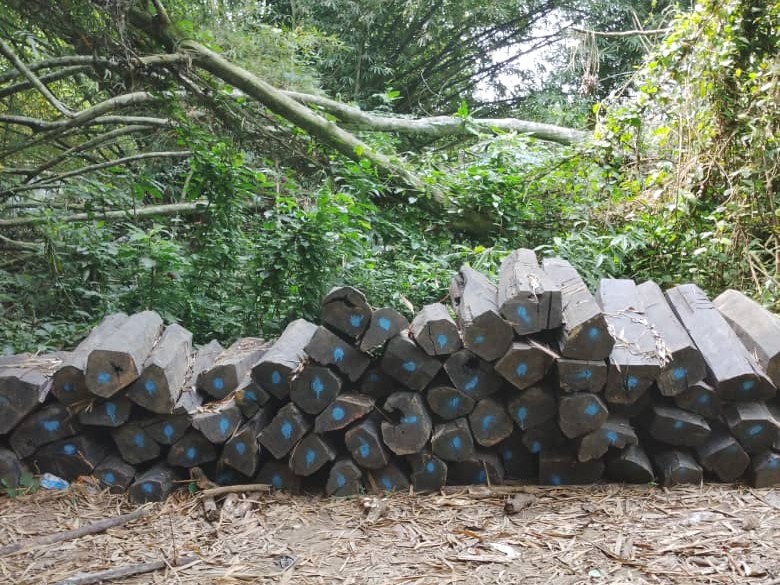
With its proximity to Nigeria, Takamanda National Park, is becoming a nest for these illicit activities. Organized syndicates and illegal loggers, often operating with support from individuals from local communities who under the guise of local are go deep into the protected forest to harvest this tree species without control
A WEB OF CORRUPTION AND DESTRUCTION
Illegal exploitation in Takamanda is not just about logging; it is a crime that involves:
- Corrupt Networks: Illegal logging is often fueled by corruption, with traffickers bribing traditional rulers and officials to enjoy free flow of the activity, allowing illicit timber to be exported in exchange for personal gains.
- Transboundary Smuggling: The timber is usually transported across the porous border into Nigeria, making monitoring extremely difficult.
- Environmental Degradation: The extraction process destroys the surrounding forest habitat of the protected area, disrupting the fragile ecosystem, degrading watersheds, and causing habitat fragmentation.

IMPACT ON BIODIVERSITY AND COMMUNITIES
SOLUTION AND INTERVENTIONS
The loss of ebony trees impacts the park’s biodiversity. A recent study found a direct connection between forest elephants and ebony trees; because elephants consume ebony fruit and deposit seeds, the illegal ivory trade—which reduces elephant populations—indirectly causes a decrease in new ebony trees.
For local communities, illegal logging is a form of exploitation. While middlemen and foreign actors reap the financial rewards, local populations are often paid small wages to do the hazardous work, while their own natural resources and traditional livelihoods are destroyed
Park service intervention
The Takamanda National Park team has made a number of field intervention to the western south western and south Eastern cluster with an objective of law enforcing

Outcomes,
- Repression; two illegal exploiters apprehended and awaiting trial as well as two engine saws were seized. The activity is still ongoing despite the effort of the park team and it is also because law enforcement is weak or better still absent in TNP.
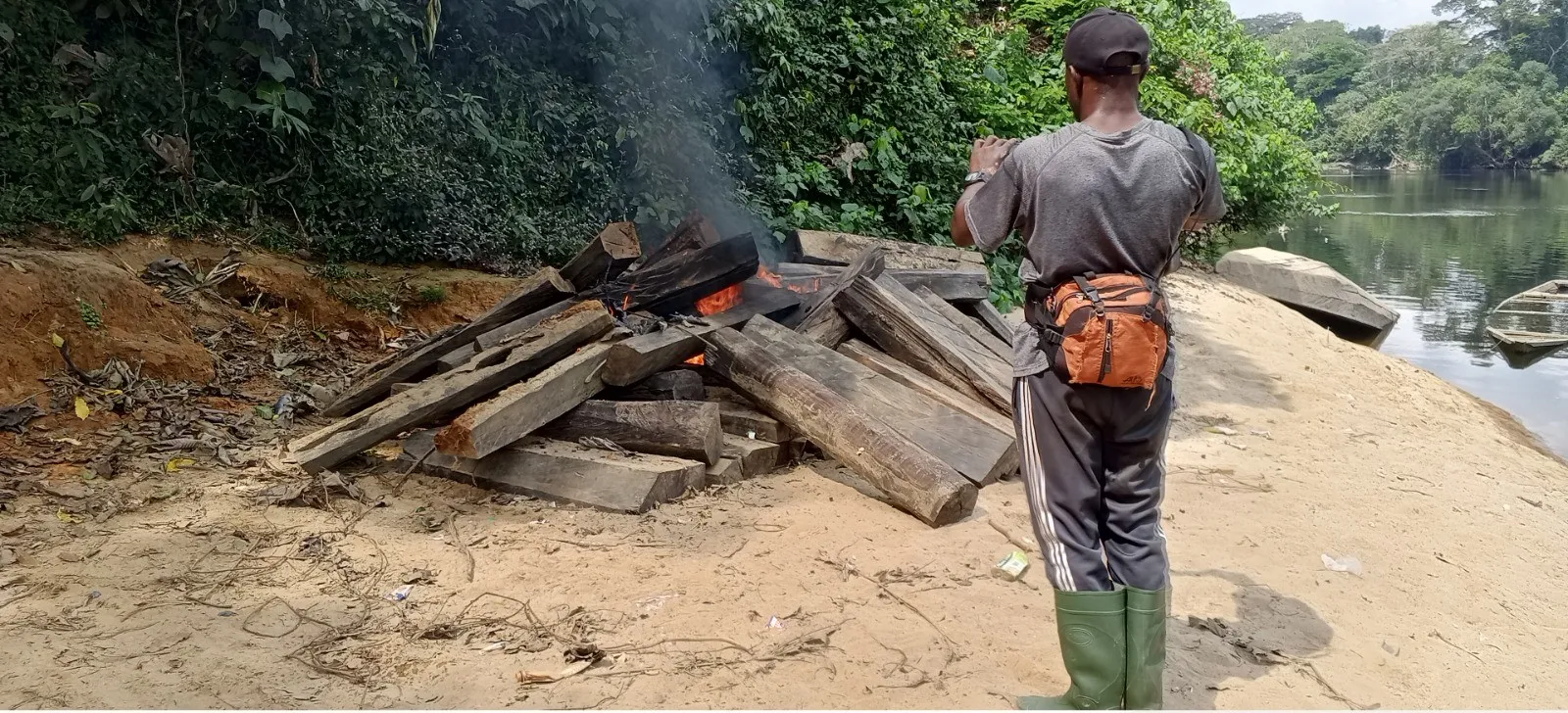
- The park team destroyed temporal shelters of illegal exploiters inside and out of the protected area and burnt piles of ebony at the Awuri river in the periphery of the south western cluster.
- TNP has also formed and trained an information Network to help monitor and report illegal exploitation and exportation of Eboni and other illegal activities who reported the presence of piles of Illegally exploited Eboni in Nyang, Ebinsi and Okpambe villages ready to be exported to Nigeria
CALL FOR URGENT ACTION
While the Cameroon government has taken steps to sanction illegal logging companies in the past, traffickers continue to find ways to exploit the forest. There is an urgent need for:
- Increased Surveillance: Strengthening the capacity of eco-guards and enhancing patrol technology in the rugged terrain of Takamanda.
- Community Engagement: Empowering local, indigenous communities to protect their forests and participate in sustainable management.
- Cross-Border Collaboration: Enhancing joint law enforcement initiatives between Cameroon and Nigeria to break the criminal smuggling networks.
CONCLUSION
Stopping Ebony exploitation in Takamanda National Park is essential not only for the preservation of the habitat of the Cross River gorilla but for the integrity of the Congo Basin Forest itself. Without immediate action, the majestic ebony trees and the biodiversity they support, risk vanishing forever.
Written by:
Agbor Solomon Eneke
Community development Technician
Takamanda National Park