
Welcome to WordPress. This is your first post. Edit or delete it, then start writing!
Co-Management Activities, LivelihoodCultivating Sustainability: Satellite Nurseries for Biodiversity and Community Empowerment in Takamanda National Park
Tataw Noel
September 15, 2026
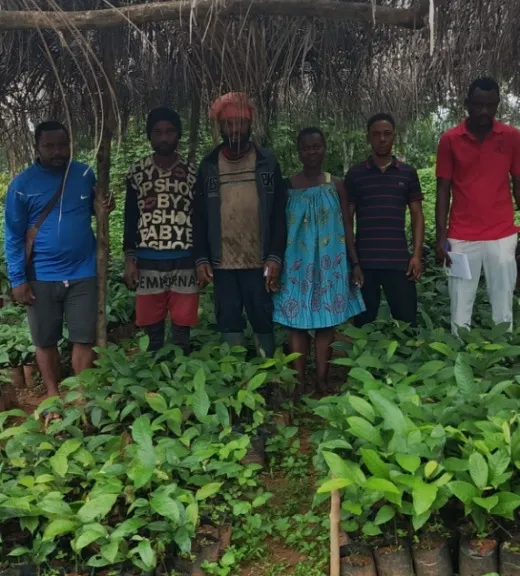
Cultivating Sustainability: Satellite Nurseries for Biodiversity and Community Empowerment in Takamanda National Park
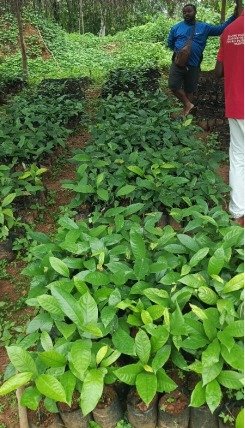
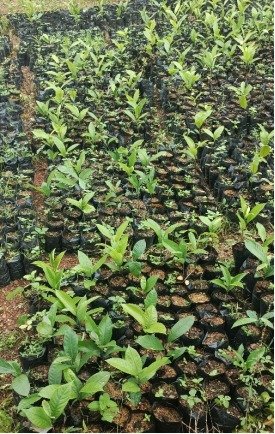
The conservation of biodiversity is an essential component of sustainable development, particularly in ecologically rich regions such as Cameroon. The Programme for the Sustainable Management of Natural Resources in the South West Region (PSMNR SWR) has initiated a significant project to establish five satellite nurseries within Takamanda National Park (TNP). This initiative aims to produce 25,000 seedlings of critical Non-Timber Forest Products (NTFPs), specifically bush mango (Irvingia spp.) and bitter kola (Garcinia kola), to support local livelihoods while enhancing biodiversity conservation efforts.
This program employs a collaborative management approach across several Protected areas in the Southwest region, including Takamanda National Park fostering genuine partnerships between local communities and Park services. This approach not only addresses the immediate need for seedling production but also empowers local communities through active participation in conservation efforts.
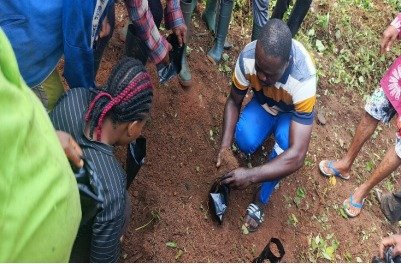
The primary objective of the initiative is to facilitate the establishment and management of five satellite nurseries that will produce 25,000 seedlings, focusing on two key species bush mango (Irvingia spp.) and bitter kola (Garcinia kola) which are essential for ecological balance and local economic stability. To achieve this, the specific objectives include establishing and managing these five satellite nurseries across two clusters, facilitating the procurement of necessary nursery equipment and accessories, training nursery operators in effective nursery management techniques, and developing a comprehensive monitoring plan to oversee nursery activities. This structured approach not only aims to enhance local livelihoods but also contributes to the sustainable management of natural resources in the region.
The project adopted a systematic approach to establishing these nurseries with initial steps involving site selection, equipment procurement and community training sessions focused on nursery establishment and management.
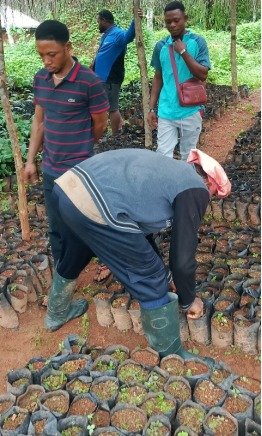
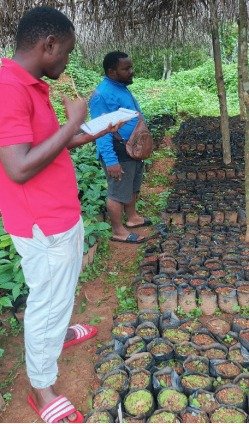
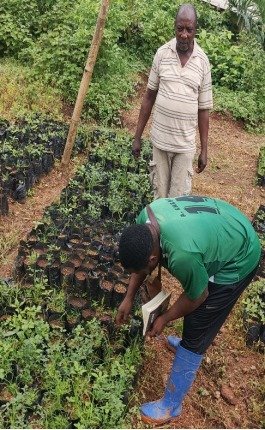
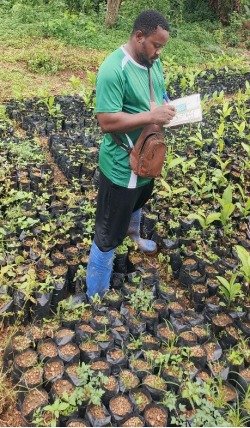
Communities were tasked with identifying suitable nursery sites characterized by flat, well-draining soil and access to reliable water sources. Each site was designed to accommodate up to 5,000 seedlings, with infrastructure that included shade structures constructed from palm fronds to protect young plants from harsh weather conditions.

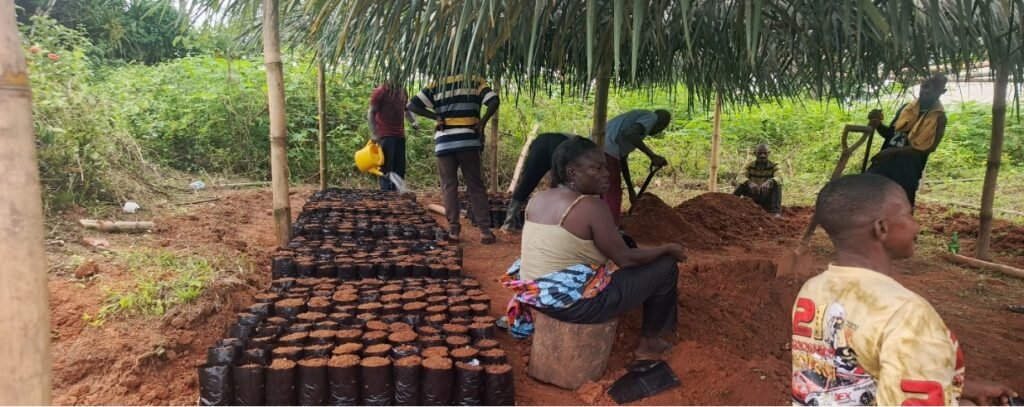
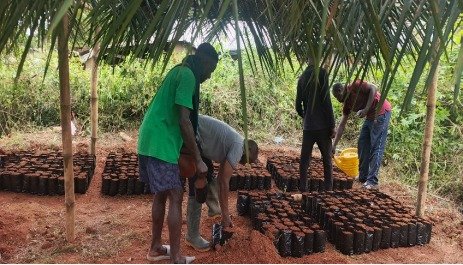
Nursery operators received training on pre-treatment techniques, such as soaking seeds in warm water and applying fungicides to enhance germination success. This training is critical, as poor seed viability can significantly impact nursery output.
The project included the purchase and distribution of essential nursery equipment, such as wheelbarrows, spades, and watering cans, to facilitate effective nursery management. Training sessions emphasized proper seedling care, including watering schedules, pest management, and monitoring for diseases. Continuous monitoring and corrective actions are planned to replace dead seedlings and enhance overall nursery health, with a focus on maintaining optimal growing conditions.
A cornerstone of this initiative is the training provided to community members on nursery establishment and management techniques. By empowering local farmers with knowledge about agroforestry and the cultivation of NTFPs, the project contributes to sustainable livelihoods while protecting biodiversity.
Planting NTFPs along national park boundaries and within community farms is a powerful agroforestry strategy. This approach not only creates buffer zones around high-conservation areas but also provides reliable income streams for local communities, reducing the pressure to exploit forest resources unsustainably.
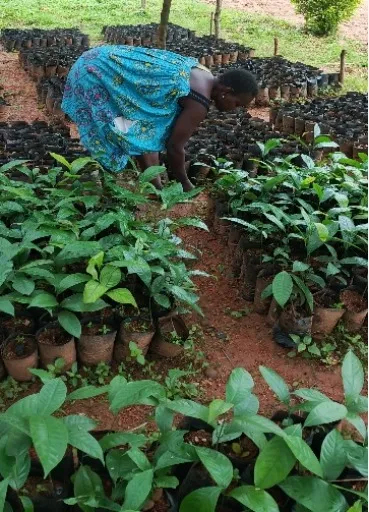
Integrating NTFPs into community farms yields numerous ecological and economic benefits. Firstly, by providing communities with access to valuable forest resources, there is less incentive to venture into national parks for illegal harvesting. Secondly, planting NTFP trees creates a semi-forested canopy that serves as a natural buffer zone, protecting wildlife habitats. Thirdly, NTFPs improve soil nutrients and maintain optimal moisture levels, benefiting both the trees and surrounding crops. Lastly, selling high-demand NTFPs provides farming households with a steady flow of income, enhancing their economic resilience.
The establishment of satellite nurseries in the Takamanda National Park area represents a significant step toward sustainable biodiversity conservation and community empowerment. The collaboration between local communities and park services is essential for the success of this initiative.
Moving forward, continued support and training for nursery operators will be crucial to achieving production targets and ensuring the long-term viability of these seedlings. By fostering a culture of sustainable resource management, we can create a win-win scenario that benefits both the environment and local livelihoods.
Through initiatives like these, we are not only preserving biodiversity but also enhancing the socio-economic fabric of communities surrounding Takamanda National Park. Together, we can build a sustainable future where conservation and development coexist harmoniously.
Tataw Guilen-Noel (Ph.D) Takamanda National ParkTags :
Share this :